Co-Living in Seoul: How It Compares to Traditional Apartment Rentals
For expats, students, and working holiday visitors planning a stay in South Korea, finding the right Seoul apartment rental is often the first major challenge. In recent years, co-living rentals in Seoul have grown rapidly across major areas such as Gangnam, Dongdaemun, and Hongdae, offering an "all-inclusive, community-focused" alternative to the traditional Jeonse and Wolse rental models — but how do the two actually compare? This guide breaks down the key differences across cost, flexibility, lifestyle, and security to help you decide which option suits your situation best.
How Seoul's Rental Market Works
South Korea's traditional rental system revolves around two models: Jeonse and Wolse.
- Jeonse (전세 — Key Money Deposit): The tenant pays a large lump-sum deposit — typically 50–80% of the property's value upfront, with no monthly rent payable for the duration of the tenancy. The landlord returns the full deposit at the end of the lease. Whilst this eliminates monthly rent, the initial capital requirement is extremely high, and tenants are responsible for utilities, internet, and maintenance costs. There is also a growing risk of Jeonse fraud, which has become an increasingly serious issue in recent years.
- Wolse (월세 — Monthly Rent): The tenant pays a smaller deposit alongside a monthly rent. This is a more flexible arrangement, but still requires finding a property through an agent, navigating strict contractual terms, and managing utility bills, waste separation, furniture purchases, and equipment repairs independently.
What Is Co-Living Rental in Seoul?
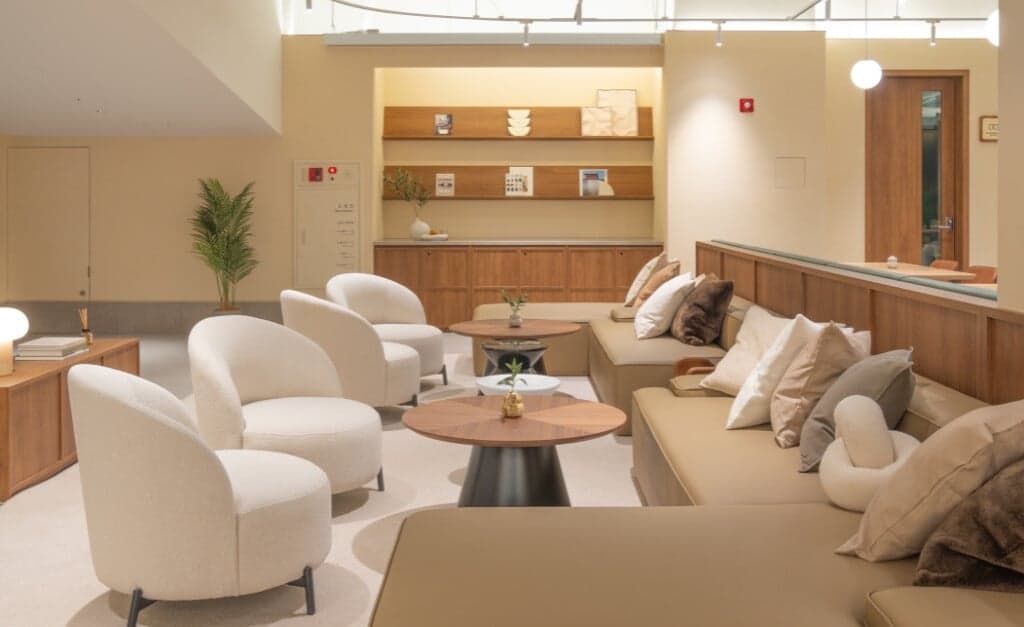
Co-living operates on an entirely different premise: all-in pricing, shared community, and professional management. It provides residents with a private bedroom alongside access to shared spaces such as lounges, kitchens, gyms, co-working areas, and rooftop gardens. Rent typically covers utilities, internet, management fees, furniture and appliances, and regular cleaning. Lease terms are flexible, from a few days to over a year, making co-living rental in Seoul particularly well-suited to expats, international students, and digital nomads.
Co-Living vs Traditional Rental: Which Is Better?
1. Co-Living vs Traditional Rental Costs and Deposit Requirements
Seoul's traditional rental market carries a steep financial barrier. Jeonse deposits range from ₩200 million to ₩800 million; Wolse requires ₩5–30 million upfront plus ₩500,000–₩1,200,000/month, with bills on top. Co-living options such as Weave Living require a deposit of just one to two months' rent (₩1–3 million), with furniture, utilities, Wi-Fi, and management fees all bundled into a single monthly payment.
2. Lease Flexibility and Contract Terms
Co-living leases run from a few days to over a year, which is ideal for exchange students, working holiday visitors, or anyone wanting to try a neighbourhood before committing. Traditional Jeonse contracts are fixed at two years; Wolse typically runs one to two years, with renewal and rent increases decided solely by the landlord.
3. Space, Layout, and Convenience
Co-living follows a "private bedroom plus shared amenities" model , such as kitchens, lounges, gyms, and co-working areas, in central locations near metro stations. Traditional rentals offer fully self-contained units, though quality varies greatly by budget; affordable options are often limited to compact goshiwon-style rooms requiring tenants to furnish themselves.
4. Social Life and Privacy
Co-living fosters community through shared spaces and regular resident events — a natural advantage for newcomers and younger residents. Traditional rentals offer greater independence and privacy, with social connections built through school, work, or personal interests rather than the living environment itself.
5. Security and Property Management
Co-living properties typically feature access control, CCTV, on-site management, and bilingual support for expats, providing a consistently high standard of security. Traditional rental quality varies considerably by building; older properties may have limited surveillance, and maintenance falls to the tenant. Jeonse fraud and deposit disputes have also become a growing concern.
Co-Living vs Traditional Rental Table
What Are the Pros and Cons of Co-Living?
From the above, it is clear that co-living suits those who prioritise flexibility, convenience, and community, particularly expats and international students navigating an unfamiliar city. Its key strengths are low deposit requirements, all-inclusive pricing, professional management, and built-in social opportunities. The trade-offs are a higher monthly cost compared to budget private rentals, less privacy in shared room configurations, and communal living rules that require a degree of compromise. For those on a transitional or short-to-medium-term stay, co-living consistently offers the more practical and lower-risk path into Seoul's rental market.
Weave Studios – Dongdaemun East: Co-Living in the Heart of Seoul
Weave Studios – Dongdaemun East is a well-positioned co-living rental in Seoul offering 143 units across flexible room types, catering to expats, students, short-term visitors, and young professionals.
- Address: 109-1 Sagijung-ro, Dongdaemun-gu, Seoul
- Room types: Private Twin (shared bathroom and kitchen); Studio Premier (self-contained en-suite units)
- Facilities: Gymnasium, entertainment lounge, co-working space, and rooftop terrace
- Transport: Walking distance to Cheongnyangni, Sindap, and Dapsimni metro stations
- Nearby universities: Korea University, Kyung Hee University, Hankuk University of Foreign Studies, and four others
- Local life: Close to Dongdaemun market, Gwanghwamun, and the creative hub of Seongsu-dong
- ARC registration: The address is eligible for use when registering an Alien Registration Card
Explore Weave Studios – Dongdaemun East
Not Sure Where to Start? Explore All Weave Living Seoul Properties
If you are new to Seoul or still deciding on a neighbourhood, starting with a flexible co-living lease gives you a secure base while you get your bearings. Weave Living offers several properties across the city to suit different locations and budgets:
- Hoegi: Weave Place – Hoegi
- Gangnam: Weave Place – Gangnam Station
- Yeouido: Weave Suites – Sunyu Parkside