Seoul is a city of contrasts. One moment you’re standing under the neon glow of a hyper‑modern shopping mall, and the next you’re wandering through quiet streets lined with traditional eateries and generations‑old markets. When deciding where to live in Seoul, South Korea, two districts inevitably rise to the top for long‑term renters: Dongdaemun and Hongdae.
They’re both exciting, both convenient, both full of personality, but they attract two very different types of people. If you're torn between Dongdaemun or Hongdae, this deep‑dive lifestyle comparison will help you picture what your day‑to‑day could actually feel like.
Seoul’s rental market has shifted dramatically. Monthly rents have been rising steadily as Jeonse listings shrink, forcing more renters ,especially foreigners, into higher‑priced monthly contracts. As of early 2026, studio apartments average around ₩720,000 per month citywide, depending on deposit size and neighborhood. With competition high, picking the right neighborhood can help you save money and find a lifestyle that matches your pace.
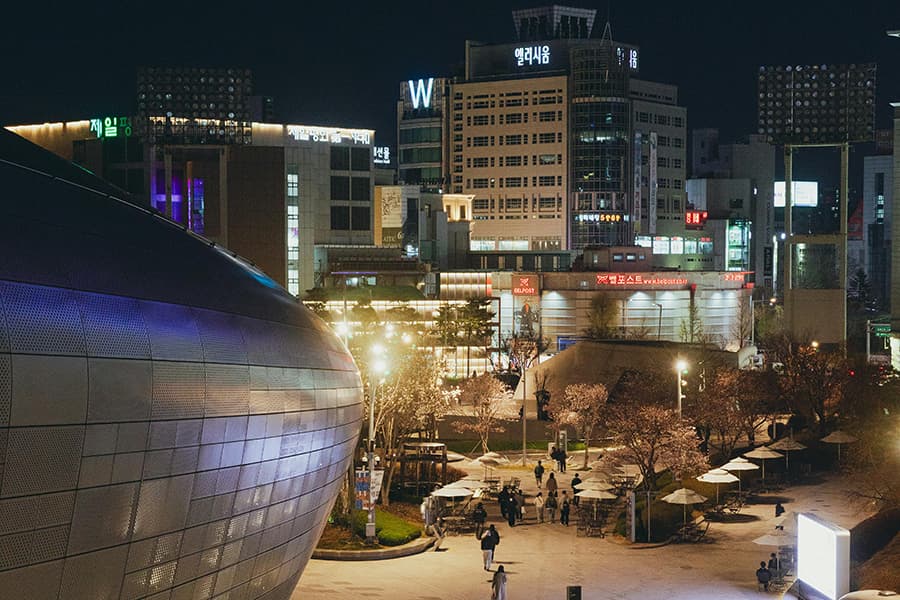
If Hongdae is the cool, artsy kid, Dongdaemun is the stylish but practical older sibling — central, efficient, and surprisingly easy to live in long‑term. Its most iconic landmark, the Dongdaemun Design Plaza (DDP), is a futuristic aluminum structure with daytime exhibitions and nighttime LED paths that turn the area into a glowing open‑air gallery.
Dongdaemun is home to one of Seoul’s largest commercial zones, including the Dongdaemun Market district, which houses 26 malls and tens of thousands of shops, many operating late or nearly 24/7. Despite the activity, it stays orderly and easy to navigate, lively without feeling chaotic.
From Dongdaemun, you can get anywhere and fast. The district is a transport super‑hub, serviced by subway lines 1, 2, 4, 5, 6 plus KTX connections, making it one of the most well‑connected areas in the city. Its proximity to Jongno and Jung‑gu, Seoul’s central business districts, also means you can reach major office clusters in 4–6 minutes by subway.
Dongdaemun’s rental market is a sweet spot for long‑term renters. Studios typically run between ₩500,000 and ₩830,000 depending on size and proximity to universities. This sits below central Seoul averages and offers strong value considering its transport access and amenities.
Dongdaemun stays active well into the night, and the steady foot traffic around DDP and nearby stations helps maintain a safe environment. The district also offers excellent public facilities, including the National Medical Center, large supermarkets such as E Mart Cheonggyecheon, and major universities like Kyung Hee University, HUFS, and the University of Seoul. These schools bring parks, sports spaces, and useful community amenities to the neighborhood.
Hongdae, on the other hand, radiates energy from the moment you step onto its graffiti‑splashed streets. This is Seoul’s center of youth culture, anchored by Hongik University, and it shows.
Hongdae is a district that dances literally. Street dancers gather in crowds, indie musicians perform on the sidewalks, cafés spill onto the streets, and experimental desserts pop up in every corner. If you crave excitement, spontaneity, and a neighborhood that feels like one giant festival, Hongdae will sweep you up in its momentum.
Hongik University Station connects to Line 2 and the AREX airport line, a dream for frequent travelers or remote workers flying in and out of Seoul. Hongdae is also very close to Yeouido, Seoul’s financial district, around 12 minutes by subway with one quick transfer.
Hongdae rentals are noticeably pricier than Dongdaemun. Studios commonly fall between ₩800,000–₩1,500,000, and multi‑room units often exceed ₩1.7 million.
Hongdae is similarly safe overall, supported by steady foot traffic from students, travelers, and café‑goers. However, its nightlife‑heavy streets, especially on weekends, can feel louder and busier, which may be less comfortable for those sensitive to late‑night crowds. Hygiene levels around the main shopping and café strips are good, though club streets can become messy during peak nights.
Here’s a clear, lifestyle‑oriented breakdown of dongdaemun vs hongdae:
Choosing between Dongdaemun and Hongdae ultimately comes down to the kind of daily rhythm you want. Both areas offer great experiences, but they suit different lifestyles.
If you want a steady, central home base with more reasonable rent, strong transport links, big markets, and late‑night convenience without nonstop noise, Dongdaemun is the more practical long‑term choice. It’s easy to settle into, well‑connected across the city, and popular among expats for its balance of affordability and everyday comfort.
Hongdae, on the other hand, is ideal if you prefer nightlife, street culture, and youthful energy right outside your door. For many newcomers or short‑term residents, this buzz is exactly the appeal.
If you’re moving to Seoul and want a home that blends comfort, design, and everyday convenience, these two Weave Living options suit different lifestyles but share the same thoughtful design approach.
A modern loft‑style officetel crafted for comfort and flexibility, Weave Place – Hoegi offers bright, efficient layouts perfect for professionals, students, and digital nomads who want privacy with a hotel‑like ease. Located near Hoegi Station, it places you close to major universities, cozy cafés, and the everyday conveniences of Dongdaemun‑gu.
For renters who want connection as much as convenience, Weave Studios – Dongdaemun East combines stylish private rooms with shared lounges, kitchens, and workspaces. It’s a warm, social environment ideal for newcomers to Seoul, giving you an instant community while keeping you close to transit, markets, and the creative energy of Dongdaemun.